

“The main thing is to keep the main thing the main thing.”
Every day presents a paradox: infinite tasks, finite time. Without a clear system for determining what matters most, we default to urgency—which often means never getting to what truly matters. Priority management is the discipline of deliberately choosing where to invest our limited time and energy. This guide will help you identify, pursue, and protect your most important work.
1. Understanding Priorities
What Are Priorities?
Priorities are:
- Not what feels urgent
- Not what others demand
- What creates the most value
- Aligned with your goals and values
The Priority Paradox
We often do what’s easy instead of important, react to what’s urgent instead of strategic, say yes to everything, and finish the day without doing what matters.
2. The Urgent vs. Important Framework
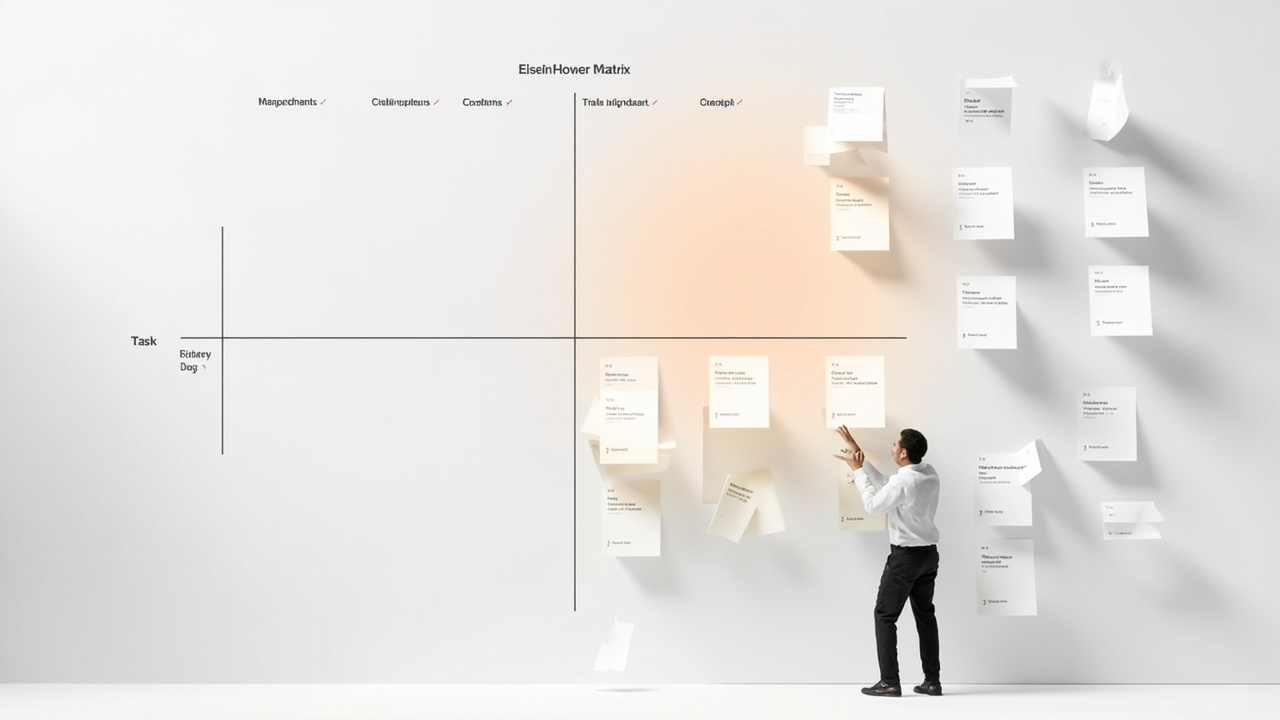
Eisenhower Matrix
| Urgent | Not Urgent | |
|---|---|---|
| Important | Do immediately (Crises) | Do scheduled (Planning) |
| Not Important | Do delegate (Interruptions) | Do eliminate (Time wasters) |
The Q2 Secret
Most people live in Q1—firefighting. But Q2 work prevents Q1 crises, creates growth and impact, and builds capacity for success. Spending more time in Q2 reduces Q1 firefighting.
3. Identifying Your True Priorities
Life Areas Assessment
Identify key life areas:
- Career and work
- Family and relationships
- Health and fitness
- Personal development
- Financial security
- Recreation and fun
The 80/20 Principle
80% of results come from 20% of efforts. Identify your most impactful activities, double down on high-value work, eliminate or delegate low-value tasks.
4. Setting Priorities Effectively
The MIT Method
Daily Most Important Tasks:
- Identify 1-3 MITs each morning
- Complete them before anything else
- Protect this time ruthlessly
- Evaluate: Did you accomplish what matters?
Weekly Priority Setting
- Review your goals
- Identify this week’s priorities
- Break into daily action
- Schedule time for each priority
5. Protecting Priority Time
Calendar Blocking
Protect priority work with calendar blocks:
- Schedule high-priority work first
- Protect blocks like important meetings
- Batch similar activities
- Leave buffer for unexpected items
Saying No to Protect Priorities
When asked to add work:
- Check against priorities
- Negotiate timeline or scope
- Say no if it would crowd out priorities
Conclusion
Priority management is choosing what to work on—and what not to work on. By identifying your true priorities, setting them clearly, protecting time for what matters, and regularly reviewing your choices, you can ensure your efforts create meaningful results.
中文版 | English Version | 返回首页
This article is also available in Chinese version